
Art and Kindness – Grassroots Peacebuilding with Ben’s Bells
Corinn Olson
Ben’s Bells is an American non-profit based in Tucson, Arizona that promotes kindness through public arts projects and educational programs. For over twenty years, Ben’s Bells has engaged volunteers to create colourful ceramic windchimes accompanied by kind messages. These windchimes, or Ben’s Bells, are hidden around the community to inspire kind behavior.
The founder of Ben’s Bells, Jeannette Maré, began the organization after the death of her young son. While grieving, Jeannette realized how meaningful small acts of kindness could be. For the first anniversary of Ben’s death, she and her friends created and hid four-hundred Ben’s Bells to promote kindness in their community. This tradition continues, and today the organization has created and distributed over 90,000 bells. Outside of creating ceramic bells, Ben’s Bells also promotes kindness through volunteer workshops, community murals, and free educational resources developed by the Ben’s Bells Science and Culture Advisory Council.
When I decided to pursue an MA in Conflict Transformation and Social Justice at Queen’s University Belfast, I knew I wanted to explore how the arts were used for peacebuilding. One of the items I brought on moving to Belfast is an orange “be kind” necklace that my parents bought from Ben’s Bells many years ago. Seeing my necklace in a new context led me to question if this organization, which was so present in my childhood, was a form of arts-based peacebuilding. I spoke with Ben’s Bells education manager Liz Levine to hear more about how Ben’s Bells seeks to create a more peaceful community and to investigate the organization’s role in creating peace.
Conflict, at interpersonal, national, and global levels, can be defined as a disruption of social relationships. Peace building is a long, transformative process of creating constructive relationships and repairing the social web damaged by conflict. Over the last two decades, Ben’s Bells has worked to create positive relationships in the Tucson community, especially through kindness education among the youngest generations. Ben’s Bells education programs involve setting shared values and norms of kindness within schools, and enlisting students and school leadership to reinforce these prosocial behaviors.
Beyond social norms of kindness, Ben’s Bells also bring children kindness-based artistic workshops. Student volunteers create clay charms, glaze bells, and work on kindness murals, which Ben’s Bells have installed in hundreds of American schools. Liz explained that these murals act as a visual reminder of a school's norms for kindness and respect.
“Then students kind of have that buy-in, like ‘this is something we created as a community,’ and so they feel a sense of contribution, of ownership in their shared space. We know that large-scale community arts have a huge impact. That visual reminder sets a tone.”
“It gives a message that ‘yes, this is a kind space, this is a shared value here, you’re a part of that, but also this community invests in and cares about and includes people in creating something that’s for everyone.”
This effect of normative kindness expands beyond the classroom. When someone finds a Ben’s Bell, they are encouraged to share their story online. Liz told me about some of the most common stories she hears.
“It's human stories. A big part of what we do is storytelling about what was the impact and why did this matter to people and how did it connect people?”
“So people find them randomly and they’ll often say something like ‘Oh the bell found me when I needed it most’...’Oh my gosh, I’ve always wanted to find a Ben’s Bell’...to hear someone else, just other members of the community talk about it and share their stories has a huge impact because when we share that story, it’s like ‘this is what your community is saying’. So, people will talk about how it reminded them of human connection.”
“It relates to how kindness spreads, and it definitely sends a message that, ‘a kindness was done here in this space where you found it’.
This community of kindness is most important in times of conflict. I asked Liz about the role of Ben’s Bells in Arizona’s current, highly polarized political atmosphere.
“I think what I do hear more and more when describing our organization to people is, ‘Oh, we really need that right now.’ And that comes from a place of wanting connection because when there is that polarization, you feel like maybe it’s harder to talk to someone that has an opposite view…Kindness and helping build connections can include listening skills, empathy, understanding where that person is coming from…”
Arts-based peacebuilding is a diverse field which has the power to transform conflict through fostering collaborative dialogue, illuminating shared futures, and providing mediums to express and influence emotions, a major driver of conflict. The imagery of Ben’s Bells, be it colourful windchimes or green flowers, are reminders of a community’s shared norms and values. The image can encourage people to speak with kindness, bring joy during a difficult time, and remind them that regardless of their differences, they are all members of the same community.
Part of creating the conditions for peace and sustaining positive peace is encouraging human flourishing in the community. Neuroscientists have found that practices such as mindfulness, gratitude, compassion, and kindness are beneficial to flourishing as they increase prosocial human connection. As Liz told me:
“The things that lead to the worst human outcomes, like actual wars and disagreements, come down to the lack of connection. So, kindness is critical, there's skill building involved. It's not always easy. When someone is being unkind to us, we tend to mirror that behavior. There's a defensiveness that comes up. Kindness can take [having the] vulnerability to speak up.”
The visual arts of Ben’s Bells are an ideal vehicle for kindness, a key element of human flourishing. Visual reminders at school, at home, or hanging in a park can open someone up to the vulnerability that kindness requires and creates. This vulnerability leads to human connection, a stronger community, and a positive peace.
As a young person, I feel a great deal of powerlessness when faced with the conflicts present in the modern world. For me, a grassroots peacebuilding organization like Ben’s Bells plays a crucial role.
“If you think, ‘Oh, I don't know where to start,’ let's just go back to the kids. ‘I'm going to work in the education space. I'm going to work on my community. I'm going to work on my block.’ And it kind of spreads. So, I think working on people and human connection is very powerful right now for people to feel like there's something that they can do.”
While some may assume that politicians, scholars, and professional mediators are the only ones qualified to be peace builders, many schools of thought emphasize the power of everyday people. The Quaker peace testimony purports that “the social worker, the teacher, the wise legislator, or the good neighbour is just as much a peacemaker as the woman or man unravelling some lethal international imbroglio”. These goodwilled community members develop Cultures of Peace, ways of life that reject violence and promote positive dialogue. Through utilizing the medium of visual arts for promoting normative kindness, Ben’s Bells, and its many volunteers, are building a culture of peace where all community members are encouraged to flourish.
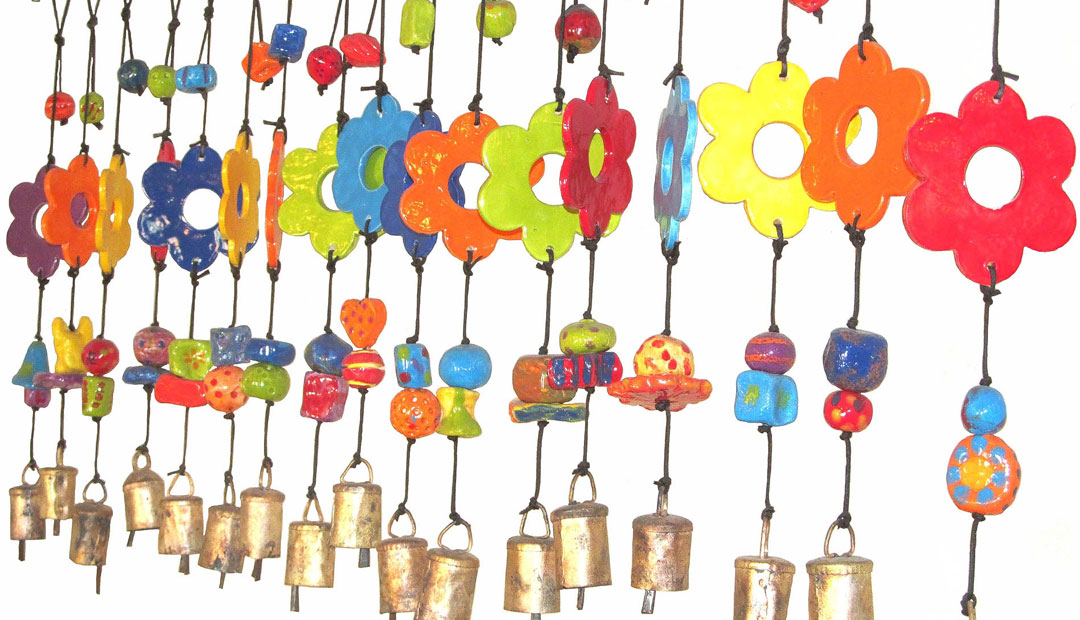
Collection of Ben’s Bells. (Junior League of Phoenix, n.d.)
-1600x2133.jpg)
“Be kind” mural at Imago Dei Middle School, Tucson, AZ, USA. (Ben’s Bells, 2025)
Corinn Olson
Corinn Olson is a Master's student studying Conflict Transformation and Social Justice at Queen’s University Belfast. She is interested in the intersection of arts and peacebuilding and has worked with scholars at the Smithsonian Institution and Woodrow Wilson Center on this topic. She graduated with honors from Arizona State University in 2024 and has been involved in volunteer organizations such as Rotary, Kesem, Tempe Community Action Agency, and Free Arts for Abused Children.
Media